
Vibe Coding Is Fast. Shipping the Wrong Thing Is Faster. Here's the Missing Step.
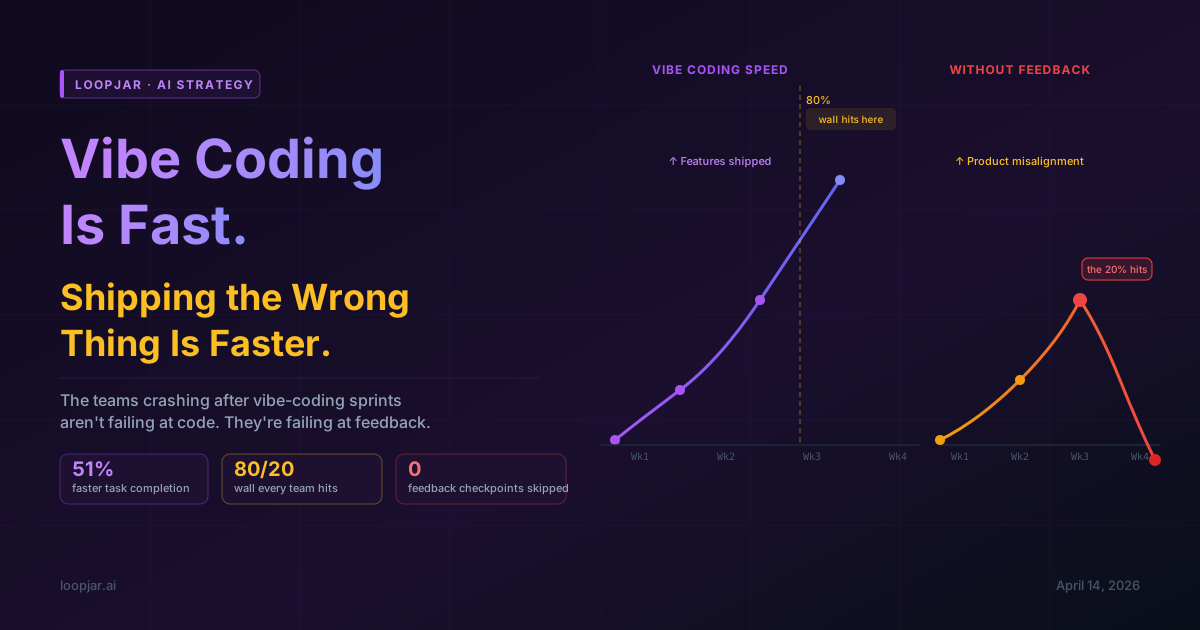
Vibe coding removed the friction from building software. It also removed the checkpoints that told you whether you were building the right thing. Here's why the teams crashing after vibe-coding sprints aren't failing at code — they're failing at feedback.
Alex Kumar
Product Strategy Lead
The story is so common now it barely makes headlines. A founder picks up Cursor. Spends a weekend vibe-coding a full SaaS — authentication, billing, a dashboard, the works. Launches on Product Hunt. Gets traction. Celebrates on LinkedIn.
Three weeks later: "Random things are happening, maxed out usage on API keys, people bypassing the subscription, creating random shit in the database."
This isn't a story about AI-generated code quality. The code mostly works. It's a story about what vibe coding quietly removed from the product development process — and why the teams crashing aren't failing at engineering, they're failing at feedback.
What Vibe Coding Actually Changed
Vibe coding — the practice of building software through natural-language prompts with AI doing the heavy implementation lifting — made one thing dramatically faster: the gap between idea and working prototype. What used to take a sprint now takes a Saturday. What used to require a team now requires a solo founder with Claude open in one window.
That compression is real and genuinely valuable. Teams using AI coding assistants report 51% faster task completion on average. By end of 2025, 85-90% of top engineering teams used AI assistants daily. The productivity numbers are not exaggerated.
But every technical friction that AI removed was also, quietly, a forcing function for product thinking.
When implementation was slow, you had to decide carefully what to build. The cost of building the wrong thing was high — two weeks of engineering time. So you talked to users first. You validated assumptions. You built in small increments and checked in with customers between each one.
When implementation became free, that discipline evaporated. Why validate before building when building takes a day? Why ask users if they want a feature when shipping it takes an hour? The feedback loop didn't just shrink — for many teams, it disappeared entirely.
"Vibe coding speeds up building, but it doesn't tell you what to build. The teams crashing aren't failing at code — they're failing at feedback."
The 80/20 Trap
Here's what the vibe coding crash pattern actually looks like in practice. The first 80% goes beautifully. AI handles the standard patterns — CRUD operations, auth flows, dashboard layouts, payment integration. You're shipping. Users are signing up. Energy is high.
Then you hit the 20%.
The 20% is where users don't behave like you imagined. Where the feature you thought was core turns out to be a corner case for your actual users. Where the workflow you designed makes perfect sense to you and nobody else. Where the pricing model you coded in day one doesn't match how enterprise customers want to pay.
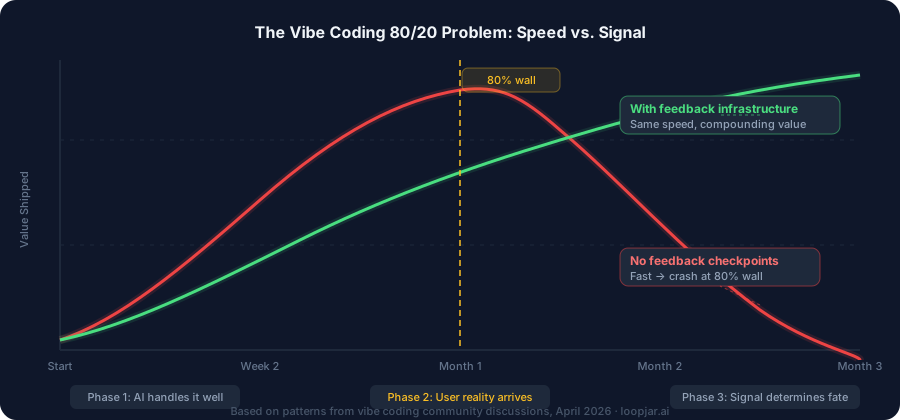
The 80/20 trap isn't a code quality problem. It's a feedback problem. You built fast, but you built blind — and when reality arrives, you're holding a codebase that's technically functional but structurally misaligned with what users actually need.
Rebuilding that misalignment costs more than the original build. Not because the code is bad, but because you now have real users, real data, and real expectations built around the wrong foundation.
The Checkpoints That Disappeared
In the pre-vibe-coding world, slow development forced three feedback checkpoints that most teams are now skipping entirely:
The "is this worth building?" checkpoint. When a feature took two weeks, you had to justify it. That justification usually meant checking whether users actually wanted it — through interviews, support tickets, existing feedback, or at minimum, a conversation with someone who would use it. That checkpoint is gone. Now you just build it.
The "are we building this right?" checkpoint. Incremental development created natural moments for course correction. You'd ship a partial version, watch how users interacted with it, and adjust before going further. Vibe coding collapses that timeline — you often ship a complete feature before you have any signal on whether the first piece landed right.
The "should we keep this?" checkpoint. Features used to be expensive enough that teams debated removing ones that weren't working. Vibe-coded features cost almost nothing, so they accumulate. The product bloats. The surface area for confusion expands. Users navigate an increasingly complex interface built from features that each individually seemed like a good idea on the day they were coded.
Naval Was Right and Wrong
Naval Ravikant's "vibe coding is the new product management" quip lit up LinkedIn and Substack communities earlier this year. The argument: if anyone can build anything, product management becomes democratized — founders just build their vision directly.
He's right that the barrier dropped. He's wrong about what that means.
Product management was never just "deciding what to build based on your own ideas." The hard part of PM was always the discipline of building what users actually need rather than what seems obvious from the inside. Vibe coding didn't automate that discipline. It just made it easier to ignore.
Carnegie Mellon's Integrated Innovation Institute put it cleanly in their April 2026 analysis: vibe coding amplifies execution velocity, but it also amplifies the consequences of wrong assumptions. You're not just building faster — you're compounding errors faster.
The PM who survives the vibe coding wave isn't the one who learned to prompt well. It's the one who built an infrastructure for knowing whether what they're prompting actually matters.
What the Feedback Infrastructure Looks Like
The fix isn't slowing down your vibe coding. That's not viable — you'd just be unilaterally surrendering speed advantages to competitors who won't. The fix is front-loading the feedback work that used to happen naturally through slow development.
Specifically: three practices that compress the feedback loop without compressing your shipping speed.
1. The pre-session brief. Before every vibe coding session, spend 15 minutes reviewing recent feedback related to the area you're about to build. What have users actually asked for in this part of the product? What have they complained about? What have they tried to do that the current design doesn't support? This doesn't slow your session — it changes what you build in it. Teams that do this report fewer sessions spent building features that get immediately abandoned.
2. The 48-hour signal check. Ship the vibed feature. Then check feedback in 48 hours — not metrics, feedback. What did users say? Did they find it? Use it? Run into the same edge case three times in a row? The 48-hour signal check catches the 20% problems before you build another layer of functionality on top of a misaligned foundation.
3. The feedback-before-backlog rule. The vibe coding temptation is to fill your backlog from your own imagination — you have the capability to build anything, so you generate endless ideas for what to build next. Counter this by requiring that every item in the next sprint has a corresponding user signal: a feedback quote, a support ticket pattern, a user interview clip. If you can't find one, you don't build it. You go find the signal first.
The Compounding Advantage
Here's the counterintuitive part: teams that slow down slightly to add feedback checkpoints ship more total value over time, not less.
Without checkpoints, the vibe-coded backlog fills with features that seemed right on the day they were built but didn't move the needle. The team is busy but not directional. Every sprint ships code that's technically functional but strategically wasted.
With checkpoints, each vibe session starts with clearer signal on what actually matters. You're not building slower — you're building more precisely. The compound effect over a quarter is significant: less rework, fewer abandoned features, higher retention from users who keep finding the product solving real problems rather than imagined ones.
The teams that built with vibe coding and survived the 20% problem have something in common: they maintained the discipline of feedback infrastructure even as they dropped the discipline of slow implementation. They kept asking "should we build this?" even when building it took an afternoon instead of a month.
What This Means for the Tools You Use
If vibe coding is how products get built now, then the strategic value of feedback tooling increases dramatically — not decreases. When building takes a weekend, the scarce resource isn't implementation capacity. It's signal quality.
The question isn't "can we ship this fast enough?" — you can ship anything in a weekend now. The question is "are we shipping the right thing?" And that question requires organized, queryable, structured feedback that you can pull up before you start a session, not six weeks later when users are confused.
A year of accumulated user feedback in a searchable, themed, structured system is the one asset a competitor can't vibe-code on a Saturday. You can replicate features in a weekend. You can't replicate years of organized signal about what your specific users actually need.
The teams winning with vibe coding in 2026 figured out that speed without signal is just expensive thrashing. The code generation problem is solved. The knowing-what-to-generate problem is wide open — and it's the only competitive advantage left worth building.
The vibe coding disillusionment wave is peaking in developer communities in April 2026. The pattern is consistent: fast ship, good demo, then reality hits at the 20% line. The fix is almost always the same — not better prompting, but better feedback infrastructure.